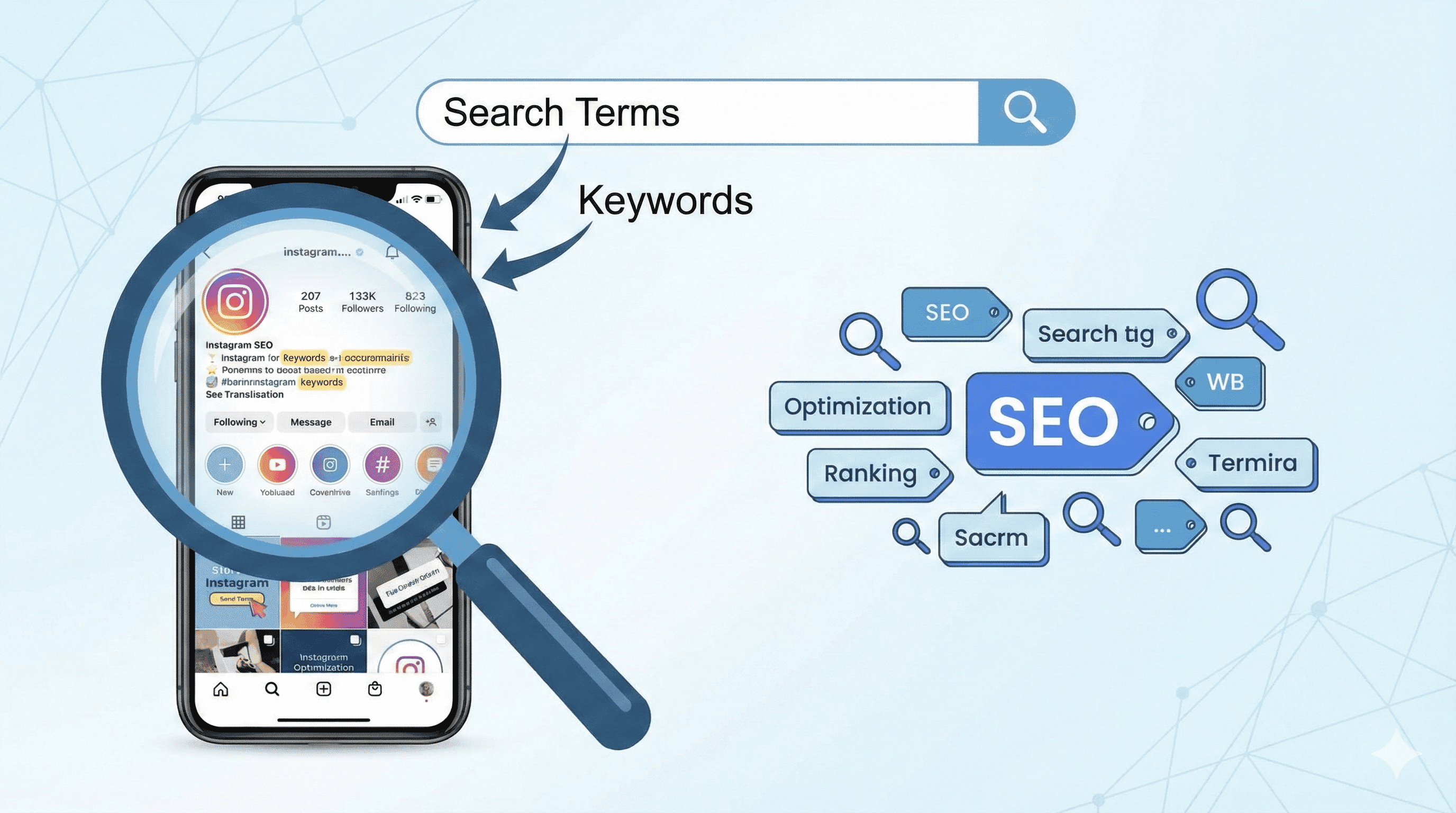
For a decade, "hashtags" were the synonym for discoverability on Instagram. If you wanted to be found, you stuffed 30 tags into your caption and hoped for the best. But the game has changed. Today, Instagram operates less like a simple social feed and more like a robust visual search engine. Users are searching for solutions, inspiration, and products directly in the app.
Search Engine Optimization (SEO) is no longer just for Google. To truly grow your account in 2026, you need to treat your Instagram profile like a website that needs to be indexed. This means optimizing every piece of text and metadata associated with your account. This comprehensive guide will walk you through the new pillars of Instagram SEO.
1. The Username and Display Name Strategy
Your SEO strategy begins with your identity. Instagram indexes two fields in your profile heavily: your Username (handle) and your Name (display name). Most users squander their Display Name by simply repeating their name or brand name.
Instead, treat your Display Name as a headline. Include your primary niche keywords. For example, instead of just "Jane Doe," use "Jane Doe | Fitness & Nutrition Coach." This simple tweak means that when a user searches for "Fitness" or "Nutrition," your profile has a significantly higher chance of appearing in the results, even if they've never heard of Jane Doe.
Pro Tip: If your username is abstract (e.g., @bluebird123), your display name MUST explain what you do. Conversely, if your username contains your keyword (e.g., @vegancooking), you have more flexibility with your display name.
2. Caption Optimization: Writing for Robots and Humans
Instagram's algorithm now scans your captions for keywords to understand the context of your post. This is a massive shift from the hashtag-only era. While you should write engaging copy for your human followers, you must also weave in relevant keywords for the algorithm.
If you are posting a recipe, ensure words like "healthy dinner," "vegan recipe," "easy cooking," and "meal prep" appear naturally in your sentences. Avoid cryptic, one-word captions or purely emoji-based captions if you want to be discovered via search. Think about what your ideal follower would type into the search bar, and ensure those terms exist in your caption.
Keyword Placement: Try to include your most important keywords in the first sentence of your caption. This signals relevance immediately to both the user and the algorithm.
3. Alt Text: The Hidden SEO Goldmine
Alt text (alternative text) was designed for accessibility, allowing screen readers to describe images to visually impaired users. However, it also serves a dual purpose: it tells the algorithm exactly what is in your image with high confidence.
Most users ignore this feature, leaving it to Instagram's auto-generated (and often inaccurate) descriptions. By writing custom Alt Text, you can feed specific keywords directly to the search engine. Describe your image in detail, including the context and key elements. PostLab AI encourages adding descriptive alt text to every export, making this step part of your standard workflow.
Example: Instead of "dog," write "Golden retriever puppy playing with a red ball in a green park on a sunny day." This indexes your image for searches related to the dog breed, the activity, and the setting.
4. Hashtags: Quality Over Quantity
Hashtags aren't dead, but their role has shifted. They are no longer the primary driver of reach, but rather a categorization tool. Using 30 irrelevant hashtags can actually hurt your reach, as it confuses the algorithm about your content's niche.
Focus on 3-5 broad niche tags (e.g., #digitalmarketing) and 5-10 specific content tags (e.g., #instagramseotips). Ensure they are highly relevant. The goal is to help the algorithm categorize your content correctly so it can serve it to the right "Interest Graph" (groups of users interested in specific topics).
Avoid Banned Hashtags: Regularly check if the hashtags you are using have been banned or restricted by Instagram, as using them can severely limit your visibility.
5. Location Tags and Audio SEO
Don't overlook the other metadata. Location tags are crucial for local SEO. If you are a local business or influencer, tagging your city or specific venue helps you show up in location-based searches. Even if you are an online business, tagging a popular city (like "New York, New York") can sometimes expose you to that regional audience.
Similarly, trending audio is a search vector. Users search for specific songs or sounds. Using trending audio (even at low volume) indexes your Reel under that audio page, exposing you to a high-intent audience looking for content within that trend. Rename your original audio tracks to include your brand name or keywords if you are speaking, as this audio title is also searchable.
6. Profile Bio Optimization
Your bio is your elevator pitch. It needs to clearly state who you are, what you do, and who you help. Include secondary keywords in your bio description. Use line breaks to make it scannable.
Include a clear Call-to-Action (CTA) and a link. Tools like Linktree or custom landing pages are great, but ensure the link text itself is descriptive if possible. A well-optimized bio converts visitors into followers.
7. Engagement is a Ranking Signal
SEO isn't just about keywords; it's about authority. Instagram prioritizes content from accounts that have high engagement. The more people interact with your content (likes, comments, shares, saves), the higher it will rank in search results.
Encourage engagement by asking questions in your captions, replying to comments promptly, and creating "saveable" content (like carousels or tutorials). Saves are a particularly strong signal of quality to the algorithm.
Conclusion
Mastering Instagram SEO is about shifting your mindset from "broadcasting" to "being discoverable." By optimizing your profile, captions, alt text, hashtags, and metadata with relevant keywords, you build a long-term discovery engine. Unlike viral spikes which fade in 24 hours, SEO-driven traffic is consistent and compounding. Start optimizing today, and let the users come to you.
Share this article
Spread the knowledge to your network